Charles Higgins Black History Memes Funny
How comedy makes us meliorate people
After years spent in dark comedy clubs, Mary O'Hara knows what makes her laugh. But what else can a good joke do? She meets the performers and researchers who say that comedy can change how we think and even how we act.
M
Maeve Higgins once prepare herself a chore. The Irish-born comedian wanted to see what life would be like if she stopped laughing at things that weren't funny. Turns out information technology wasn't as easy equally she thought. "It was so effing difficult," she says. "Laughter is a lubricant and is expected, and information technology's really difficult not to do information technology."
Information technology's coming up for 11pm on a bone-chillingly cold Tuesday night in New York. Higgins and her friend Jon Ronson are huddled backstage behind a thick black curtain, mulling over how the latest gig in their monthly stand-upwards series, I'one thousand New Here – Can You lot Prove Me Effectually?, went. They're pleased. Tonight's assorted comics went down well with the punters, a youngish, hip oversupply who'd braved the bitter weather to sit in a packed, dimly lit venue nether a pub – all in search of some laughs.
The prove is loosely predicated on the theme of being bewildered recent arrivals in a new boondocks, every bit Higgins and Ronson were not so long ago in Brooklyn. Higgins (a virtuoso comic, author and TV personality in her native Ireland) and Ronson (ameliorate known as the bestselling author of The Psychopath Exam and The Men Who Stare at Goats) propose there'due south something peculiarly special virtually being part of the shared experience that is alive one-act – that curious alchemy that occurs when people come together specifically to laugh (or not, depending on the quality of the acts).
"Information technology'south connection," Ronson says. "That'due south what this bear witness'southward about. It'south near us and the audience connecting with each other… There's something about existence in the same room with somebody, reading each other'south body language, too."
Higgins nods. "Definitely. It's a communal thing; it's a release." Perhaps, she says, because audiences tend to be squeezed together in comedy clubs, acts get to exist adventitious anthropologists and observe at close quarters how individuals interact when exposed to jokes or funny tales. "Yous [might] see a couple," Higgins says, "and y'all tin can tell that they're checking each other's responses. Like, can I laugh at this?"
Making people laugh has the potential to brand the joke teller feel a flake better, too. "This is perfect for me," says Ronson of the gear up-up, an intimate informal space in which the two hosts casually banter and tell stories in betwixt a succession of comedians taking to the stage. "This is totally a therapy for me, doing this show."
Comedy is more than only a pleasant way to pass an evening, sense of humour more than something to amuse. They're interwoven into the fabric of our everyday existence. Whether you're sharing an amusing story downward the pub, making a cocky-deprecating joke after someone pays y'all a compliment or telling a dark joke at a funeral, humour is everywhere. Just what is it for? And tin humour, equally comedy, alter how nosotros feel, what nosotros recollect or even what nosotros practice?
Humor is not just frivolous entertainment - information technology can help united states of america cope with situations that are overwise incommunicable to empathise (Credit: Alamy)
As an integral part of human interaction, humour has been on the minds of thinkers for centuries. As Peter McGraw and Joel Warner explicate in their contempo book, The Humor Code: A global search for what makes things funny, "Plato and Aristotle contemplated the meaning of one-act while laying the foundations of Western philosophy… Charles Darwin looked for the seeds of laughter in the joyful cries of tickled chimpanzees. Sigmund Freud sought the underlying motivations backside jokes in the nooks and crannies of our unconscious."
One of the most enduring theories of sense of humor arrived courtesy of the philosopher Thomas Hobbes. Information technology asserts that humor is ostensibly well-nigh mocking the weak and exerting superiority. While this is clearly the function of some comedy – anyone who has flinched at a comic's lame effort to poke fun at, for example, disability will attest to this – it'southward a relentlessly bleak and far from complete explanation of the purpose of humour.
"My first thought when I think about humour is information technology'south a keen way for u.s. to have evolved and then we don't have to hit each other with sticks," says Scott Weems, a cognitive neuroscientist and writer.
In his recent book, Ha! The science of when we express joy and why, Weems reviews a raft of academic studies, including those that have used scanning to bear witness which parts of the brain respond when we encounter something funny. In the book, he posits a theory: substantially, that humour is a form of psychological processing, a coping mechanism that helps people to deal with circuitous and contradictory letters, a "response to conflict and defoliation in our brain".
This, in part, he says, is why we laugh in response to dark, confusing or tragic events that, on the face up of it, shouldn't exist funny at all. Why, for example, would jokes broadcast subsequently nine/11 if we weren't collectively grasping for means to parse how unsettling and disruptive it was? Humour that is in bad taste or cruelly targeted at particular groups may generate conflict, only, for Weems, humour is our manner of working through difficult subjects or feelings.
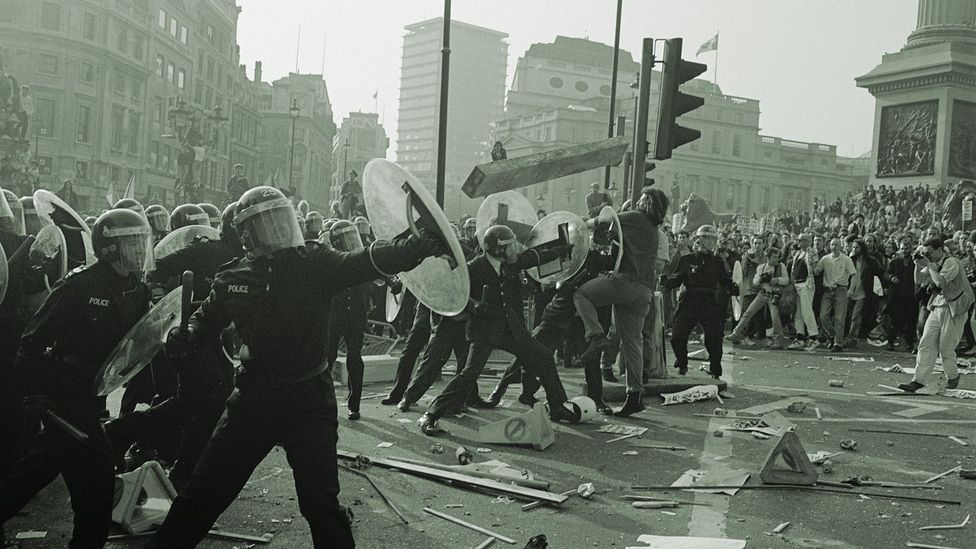
Troubling news events can inspire nighttime satire, which may assistance unite people in their shared values (Credit: Getty Images)
Over the years, researchers have built a substantial body of evidence that some types of comedy – including sophisticated satire, which is growing in popularity – perform a potent social function, from breaking taboos to belongings those in power to account. Avner Ziv, who has written numerous books about humour, explores this theme extensively. As he writes in Personality and Sense of Humor, "comedy and satire possess a common denominator in that both try to change or reform order by means of sense of humour. The two forms together constitute the all-time illustration there is of the social function of humour."
You don't take to await hard for examples of comics placing social justice at the centre of their work. New York-based Negin Farsad's new book, How to Brand White People Laugh, has been described as "memoir meets social-justice-comedy manifesto", and the quondam social policy analyst talks about one-act equally a platform for advancing social justice.
For some comedians, it's not simply about getting laughs – information technology's well-nigh changing what we think and maybe even what we do. If there's one comic who really personifies this, it's Josie Long. A social justice activist and a comedian, Long has a reputation for delightful, optimistic, whimsical humour and nimble storytelling. She'due south been doing alive comedy since her teens and her latest BBC radio testify, Romance and Adventure, has been widely lauded.
Still, as her career has evolved, she has consciously put social and political topics at the heart of her deed. She believes that comedians have a role to play in articulating and challenging some of the most pressing issues of the day.
"Politics tin can exit y'all beleaguered, plagued, miserable," she says. "It'southward that maxim where they say, 'Satire is to afflict the comfortable and comfort the affected'. That's why humour was important [to me]. It was a way to be useful for other people." In her work, Long filters the political realities of contemporary Britain – specially what she sees every bit overt injustices by government – through humour.
It's vital to empathise the task comedy tin can do in actively providing a weigh to bigotry and prejudice besides as understanding the types of humour that reinforce negative stereotypes, she says. "I desire to make sure I'm punching up, non punching downwardly."
Context is crucial to sense of humour (Credit: Getty Images)
There is a "powerful identify" both within the comedy spectrum and society, Long says, for the sort of audacious, disruptive and challenging observations of comics like John Oliver and Stewart Lee, who she admires. That they accept a role in contemporary society beyond just making people express mirth is undeniable; their work is evidence of the affect one-act tin can accept more widely. "John Oliver is in a position where he has more people watching him than commentators," she says.
"Whatever happens in British society, stand up-upward immediately begins a process of discussing and reinterpreting it," says Sophie Quirk, a Academy of Kent academic and the author of the 2014 book Why Stand up-upward Matters. "This process necessarily involves more than just an expression of the private performer's viewpoint. If nosotros find a joke offensive, we protest past non laughing at it."
In many ways, Quirk says, the sorts of observations made by comics such as Long are reinforced by her contempo bookish work, which has involved lengthy interviews with jobbing comics. "I think sometimes the literature ignores [the] fact that comedy does many things," she says. "Joking socially is a style of bonding with people." Political one-act, she argues, can foster a sense of shared ideals. "If you're getting people together and talking virtually views that in the broader social context are quite marginal, and we're all laughing together at those, so yous're kind of affirming them."
"I think one-act can exist a way of passing on nasty ideas," she says, echoing Long, adding that information technology's important to study in what means humour reinforces or undermines stereotypes.
Co-ordinate to John Fugelsang – a New York-based political comedian, author and player who hosts the radio evidence Tell Me Everything – the recent ascendance of political one-act is one of the almost fascinating aspects of the function of humour in US entertainment, and in the country'southward broader culture, likewise. While yous do sometimes just need something lightheaded to watch, comedy has much greater resonance than it tends to exist given credit for.
"I recall it's innate that if someone tin can make yous express joy over what a mess everything is, then that person has not merely earned your admiration but, on some level, has also earned your trust." In the case of the United states, he says, the comedy has had to get so skillful because the news has got and then bad. "This could be the best time always to exist a political comedian, and they may be needed more than than ever."
The best comedians, he argues, are our most constructive anthropologists and cultural critics. "Political comedy, when done correct, is a delivery system for truth."

A good joke packs a harder punch than many other forms of dialogue, and information technology can reach people who would otherwise be unwilling to mind (Credit: Getty Images)
British comic Stephen K Amos sells out venues seating thousands, year in, year out, and has successful BBC Radio 4 programmes under his chugalug. Amos is convinced that when comics consciously tackle pressing or controversial social issues like racism and homophobia, they can reach people on a much more than meaningful level than that achieved past briefly lifting someone's mood. And while information technology may be hard to quantify, he says, the social and psychological impact of comedy warrants much greater recognition.
Apparently, some one-act has no overt social goals at all – it'southward non like the bulk of comedians are trying to change the world – simply Amos contends that one of the singular properties of sure one-act "when done well" is the liberty to explore ideas in an unconventional or counterintuitive mode, to subvert society'southward norms.
The inquiry backs this upwardly. Although the role of comedy is to be entertaining first and foremost, through interviewing comedians, Sharon Lockyer, a sociology lecturer and the director of the Centre for One-act Studies Research at Brunel University, has identified a number of possible other functions. These include challenging "stereotypes and ascendant discourses that marginalise and stigmatise item individuals", for example in relation to disability and sexuality.
Amos's piece of work frequently tackles the issues of race and homosexuality by upending stereotypes. "I don't do things for shock value," he says. "I do stuff that matters to me. In the old days it was just nearly doing jokes. We've moved on – people are talking well-nigh things that affair."
Every bit an example of what one-act can do, Amos tells the story of a teenager who came upwardly to him subsequently a gig that featured Amos relaying his own tale of coming out equally gay to his family unit. "The lad came up to me and went: 'I'm hither on my own… I think I'm gay and I'g going to tell my parents about information technology this night.'" In another instance, a woman who brought her "very grumpy" dad to a gig told Amos that his ready had fabricated her father rethink his views on gay people.
"Oh my god, when you bear upon people on that level? What I'yard doing is assisting you to release those chemicals in your body to brand y'all express joy uncontrollably. And if that ways challenging your preconceived ideas most who I am, great. We tin can run with that."
"Very frequently what comedians can do is use logic to make painful things brand sense," says John Fugelsang. "They can articulate complicated emotions and arguments by using jokes equally a framing mechanism, when but existing in the center unexamined can be murky and baggy."
When it comes to issues like social justice, "humour tin be a social corrective," he says. "Nosotros see this in African American comedy, LGBT comedy, Latino one-act, religious humour, feminist humour. It validates shared experiences, gets us to think more than flexibly and reframe situations in this shared experience we call life."
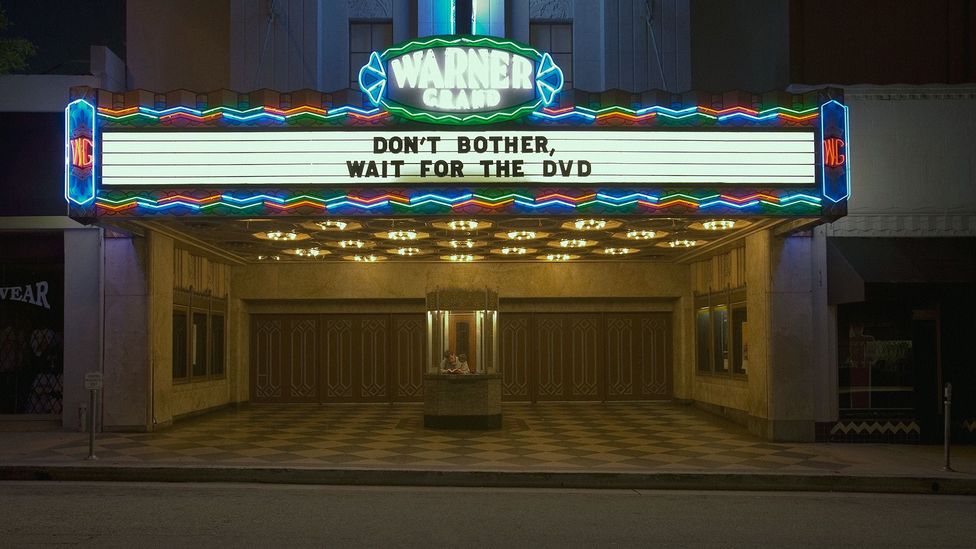
As the cop-turned-comedian Alfie Moore points out, "if they are laughing, they are listening" - meaning you can spread your bulletin to more people (Credit: Getty Images)
Similarly convinced of comedy's potential to change us is Alfie Moore. A cop by profession and as well a regular on the BBC, Moore's day job is a serious one, yet he harnesses his feel of information technology to button boundaries with his comedy. His stock-in-merchandise is poking fun at policing and walking "a fine line" between the serious and the silly, deploying jokes to expose nonsensical policies.
People come to his shows with their own ideas near policing, Moore says, but tin can leave with their perceptions altered most what the job is and how it slots into society. "One phrase I heard recently was, 'If they're laughing they're listening', and I think that'due south a powerful quote.
"Nobody ever listened to me when I was in the police. I had no influence. I'd never met senior officers and I'd never met my master constable. Now I've been out of the police, lots of people listen to me. The Radio four show got one.4 million listeners per episode. I had chief constables emailing me."
Liz Carr'south wickedly night one-act pivots on challenging perceptions. Like Amos, Carr, who is also an actor and writer, says that to regard one-act but equally something frivolous would constitute a failure to comprehend its identify in the globe. With a career spanning radio, television (she currently stars in the hit drama Silent Witness), stand-up and sketch comedy, Carr was one of the pioneers in the flourishing arena of comics with disabilities.
She'south known for repeatedly defying convention: in her comedy she uses linguistic communication such as 'crip' (short for cripple) that'south unremarkably associated with demeaning disabled people, as a way of reclaiming it. She'south about to ruffle a few more than feathers past making a musical one-act about assisted dying, to be performed at London's Regal Festival Hall in the fall of 2016. It is, she says, another instance of how humour can be trained on even the nigh sombre of topics and prod people towards rethinking preconceived notions.
"Oft we don't know how to react most things," she says. "And there'due south an expectation that you lot shouldn't express joy at this or at that. I'm thinking about inability [hither]. People are, 'Oh… we don't want to offend anyone.' So there'southward something about, if you can break that down in laughter, it'due south like a relief and a release valve.
"Just your presence at any time changes people – changes interactions… I simply retrieve [comedy] opens people up in a manner that I've not found whatsoever other medium works."
Social scientist Sharon Lockyer has been studying the connection betwixt one-act and inability. She's published articles that examine disabled comedians' views on the British TV comedy manufacture and on the cultural shift from disabled people being largely targets of comedy to being 'comedy makers'.
Lockyer thinks that this shift and other changes, such as disparaging jokes becoming less tolerated, are indicative of wider changes in social club. "The political potential of comedy conspicuously suggests that comedy is worth taking seriously," she says.

Psychologists are now increasingly interested in exploring the relationship betwixt the comedian and the audience (Credit: Getty Images)
Our appetite for comedy is growing. The biggest comics – from Sarah Millican and Michael McIntyre in the United kingdom of great britain and northern ireland to Chris Stone and Amy Schumer in the United states – pull thousands upon thousands into gigs.
Hugely successful performers such as Louis CK and shows like Broad City have distributed their comedy over the internet, and there is a profusion of funny Vines and YouTube clips. Some of the all-time podcasts are comedic, including Marc Maron's WTF, which gets a reported five million downloads a month and an average 450,000 downloads per episode. There'south even a podcast for comedians by a comedian, aptly titled The Comedian'south Comedian Podcast.
Academic researchers are also increasingly interested in sense of humour, often existence lumped together under the epithet 'humorologists'. In 2009, a research lab dedicated to the "scientific written report of humour, its antecedents, and its consequences" opened at the University of Colorado Boulder (the Sense of humour Research Lab at that place is affectionately known as 'HuRL'). And in the Uk, the Heart for One-act Studies Research (CCSR) was ready at Brunel University in 2013 to study the social impact of comedy. And so there'south the International Order for Humor Studies (ISHS) and its quarterly journal, Humor : International Journal of Sense of humour Research, and the biannual journal Comedy Studies.
Peter McGraw, a coauthor of The Humor Code and an expert in emotion and behavioural decision theory at Hurl, was once told by an Ivy League associate that studying sense of humour was a "career killer". But he suggests that because we are likely to experience humour much more often than emotions like fearfulness or regret, studying it has as much bookish merit as supposedly more worthy topics.
"People pursue [humour] in all these parts of their lives: their amusement consumption, with their friends and families. And there's show about using information technology to cope. Some other matter I recollect is an of import puzzle – is that when you try to be funny and y'all fail… you tin create conflict. Yous tin upset people. You can anger people."
But when Sophie Quirk links comedy to an established 'serious' subject area, like politics, or to negativity do people think there is any value in it. "Just because it's fun, doesn't mean it's insignificant," she says. "People think that [studying] fearfulness must be very of import. But laughter, the state of being amused – because it'southward fun and heady, that's the reason information technology'due south been neglected and that'south really, really odd."
Research is exploring all kinds of aspects – from what happens in the brain when we 'get' a joke, to the cardiovascular benefits of a proficient express joy. It could as well shed light on the nature of people who choose comedy as a career. For example, research presented in 2014 suggested that, despite their work, comedians had less activity in encephalon regions associated with the pleasure and enjoyment of sense of humor compared to everyone else.
"This generation is when we are going to start seeing people studying humour similar they studied intelligence," Scott Weems tells me. "Sense of humour may be the way of finally getting at what is special near the human being condition… I don't know if it will be in my lifetime, but we're getting close."
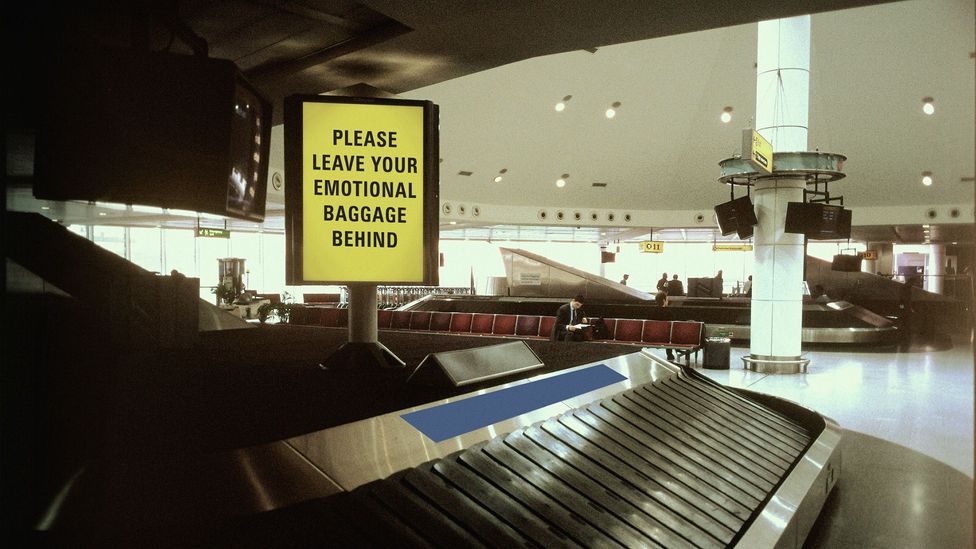
Some cognitive scientists think that humour is at present the best way to study the human status (Credit: Getty Images)
On the opposite side of the Usa to Maeve Higgins and Jon Ronson, Jamie Masada is brimming with energy. He's in the heavily upholstered upstairs bar overlooking the stage of the Express joy Factory comedy club on Sunset Boulevard, Los Angeles. He'due south near to host a weekly open mic night where aspiring comics perform three minutes of the best textile they tin can muster. Information technology doesn't thing that most of them will be rubbish (he'south seen it all in the 30 years he'south run the night) – at least they'll have a go at making people laugh.
Masada, who migrated to America from Islamic republic of iran every bit a teenager, says with consummate sincerity that if observing audiences night in, nighttime out has taught him anything, it's that comedy can take a profound impact on how we feel, and even how we act. He recounts seeing people go far at comedy clubs looking utterly miserable, but then leaving with a grin on their face, visibly transformed – married couples that turned up barely speaking leaving belongings hands.
"Information technology's and so fundamental to us," he says. "Nosotros need comedy similar air to breathe." Masada's ebullience could be read as self-serving (he does run comedy clubs after all), just that doesn't mean he's not on to something. For many comics in that location are profound mechanisms at play in their work, especially when the humour veers towards political and wider social issues.
"You should have a go!" he urges me, with a broad smile on his face. "Making someone express mirth is the greatest power any human being tin can have!" He isn't joking.
---
This is an edited version of an article originally published past Mosaic, and is reproduced under a Creative Commons licence.
Join 600,000+ Future fans by liking the states on Facebook , or follow us on Twitter , Google+ , LinkedIn and Instagram .
Source: https://www.bbc.com/future/article/20160829-how-laughter-makes-us-better-people
0 Response to "Charles Higgins Black History Memes Funny"
Post a Comment